



ICF Accredited Level 1 Associate Coach Diploma
(Triple Accredited)
Our ICF Accredited Level 1 Associate Coach Diploma is unique in the UK in that it is in fact a triple accredited program holding simultaneous credentials from the world's three leading governing bodies ( ICF, EMCC and AC)
This means you get the benefits of all 3 certifications in the one diploma as you do not have to choose just the one accredited pathway - making it also more cost effective and providing greater value than coaching programs offering 1 certification.
%20(3).png?width=50&height=50&name=Untitled%20(100%20x%20100%20px)%20(3).png "Untitled (100 x 100 px) (3)")
Each body has independently audited our curriculum, our trainer credentials, assessment rigour, and ethics alignment. Passing all three means our Associate Coach Diploma meets the strictest standards across the board, not just one body's bar.
1) The International Coaching Federation ( ICF) is world's largest organisation for professionally trained coaches and is best known for setting industry standards. It accredits coach training programs and issues the most widely recognized coaching credentials which for the Level 1 certification is the ACC (Associate Certified Coach)
2) European Mentoring and Coaching Council ( EMCC ) founded in 1992 covers mentoring and supervision as core disciplines, not just coaching, and its competence framework leans more developmental. Despite the name, now operating globally.
3. Associate of Coaching UK (AC ) professional body for coaches, founded in 2002 and headquartered in the UK. It accredits coach training programs and offers individual accreditation at four levels:.Distinctive features include client feedback as part of accreditation, professional indemnity insurance requirements, and a strong ethics focus
Background ( How can this text below be broken up so it looks better)
Our lead trainer is Ruth Kudzi, Founder and Master Certified Coach ( MCC - the highest ICF credential) and one of the UK's leading coaches. The other core trainers alongside her are all ICF Professionally Certified Coaches (PCC). Having developed the course herself based on her 30 years of Psychology experience, the curriculum and the various modules guarantee depth and rigour. Key to this is creating small group learning environments with high levels of personalisation.
We teach Psychology-informed coaching which means you're able to go deeper with your clients and work with their brains and nervous systems to create lasting change. We have a whole person holistic approach to coaching which means you'll leave the diploma with a range of approaches and tools which allow you to be flexible with your clients.
We have developed the curriculum alongside a practical focus on application with coaching practice in nearly every session, lots of developmental feedback and at least 50 hours of coaching practice required outside the course. With this depth of experience you will be a confident and competent coach on graduation.
PLUS we have a strong community focus: we believe in supporting every coach as an individual and provide an inclusive supportive environment both during and after the course with ongoing access.
AND our experienced trainers are practicing coaches with a minimum of 500 coaching hours, they bring their own case studies, examples and perspectives to bring the training to life and answer your questions. Alongside the trainers we have a bank of example sessions across different sectors and using different tools so you can see real life examples to support your own development and practice.
You will get exceptional support with a team responsive to your individual needs and feedback : our role is to ensure you become a confident and competent coach. With over 97% completion rates we know we deliver and are committed to supporting you in a flexible way if you need additional help and support. When you commit to us we commit to you.
Diploma Overview - What You Get
.png?width=736&height=513&name=DSC_8540%20(2).png "DSC_8540 (2)")
-
Weekly 3 hour group sessions online over 4 months with experienced, accredited trainers including our founder Ruth Kudzi, MCC
-
We give you structured feedback from Module 2 onwards focusing on the ACC standards (from the ICF). Over the course you will have feedback on your coaching a minimum of 8 times
-
Small groups with a maximum of 14 people. All taught via zoom.
-
73 hours of accredited coach training including 45 hours of live training . 25 Coaching hours
-
10 hours of mentoring; 5 group and 5 individual with an ICF PCC or MCC coach who has at least 1000 hours of coaching experience.
-
An allocated peer partner and support to find probono and paid coaching clients
-
Access to a private community for support and questions
-
Monthly business mentoring and marketing Q&A if you want to start or grow your own business
-
Ongoing Alumni support when you graduate
-
A resource bank of training with over 40 different workshops and 30 different coaching sessions you can watch at your leisure
-
Real time feedback on your coaching and the chance to watch live coaching demonstrations with Ruth Kudzi, MCC
Associate Coach Diploma Module Breakdown
Our curriculum is grounded in Psychology & Neuroscience giving you practical tools and approaches you can use with clients as well as helping you design your own coaching approach congruent with the ICF competencies. This well-rounded approach ensures you stand out as a coach.
Module 1 - Introduction to Coaching and ethical practice
We support you to contract as a group and identify how to get the most out of the program. We also frame the course learning and give insight into the ICF core competencies and code of ethics. This is where you get more practical with a focus on more of the “what” of coaching exploring transactional models as well as building on your knowledge of the core competencies.
Module 2 - GROW Model
We explore the GROW model as a framework for coaching. How to use G to set great Goals, moving onto how to explore Reality effectively with Clients. Then we move onto understanding the importance of exploring Options and then how to support Client growth through ways forward.
Module 3 - Coaching for Emotions
This module focuses on the “who” of the client by exploring emotions and deeper work. Exploring ways to work with client’s emotions Supporting clients to identify emotions and change emotional state.
Module 4 - Coaching Psychology including Strengths, Values and Identity
This module focuses on exploring your needs, your Client's needs and their identity on a deeper level. We also discuss having an appreciation of the clients context and it’s impact on the coaching relationship. We discuss the merits of a strengths-based approach to coaching and what it mean.
Module 5 - Positive Psychology & Coaching Psychology
This module explores research in Positive Psychology and Coaching Psychology applying in to coaching topics linking in with current coaching research and supporting improved decision making. Some of the topics we explore are supporting gratitude practice and positive affect, ways to build resilience in clients, models for wellbeing and strengthening the coaching mindset and coaching presence using positive psychology tools.
Module 6 - Neuroscience - The power of our thoughts and Neuroplasticity
This module brings together all of the learning from previous sessions and explores habit formation and behavioural change, understanding how to work more effectively with clients brains and helping clients to reduce stress and make better decisions.
Module 7 - Your Coaching Approach
This is where we bring together all of your learning whilst reviewing the holistic coaching framework and understand how to use it, reflecting on your learning and next steps and building your confidence on the path to certification and accreditation.
How Do We Help You To Become A Confident, Credible Coach That Achieves Consistent Results?
Our mission is to make you a confident credible coach and we do this in different ways based on your background and your goals.

New to Coaching

Existing Coach
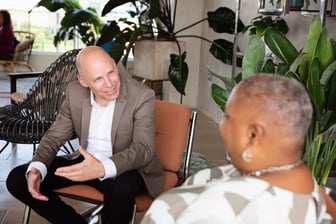
Develop coaching skills in current role
When you click " Click HERE" above on New To Coaching you get the 3 tabs below. How does the content appear? As we will also need similar length content for Existing Coach Click here and Coaching skills click heres. Is it a pop up to save space or another alternative?
[ As someone relatively new to coaching, you may be asking yourself do I have what it takes to become a coach? Am I the right person to coach others? Self doubt / imposter syndrome can creep in but confidence in coaching doesn't come before training. It comes through it.] Our trademarked SELFLESS™ model provides a clear and flexible framework giving you confidence on the ingredients of successful coaching sessions by understanding how to be a coach as well as how to "do" coaching.
This is coupled with our focus on practical skills using scenario based learning, case studies and example sessions alongside coaching practice and developmental strengths based feedback to build your confidence in your ability as a certified coach.
[ As a newly accredited coach, With relatively little coaching experience, you may be asking yourself how will I stand out against other coaches, especially those with more experience. Imposter syndrome may play a part with some people. The good news is that less than 10% of all coaches are ICF Accredited] Even better news is the fact both our Associate and our Professional Diplomas are actually accredited by 3 leading coaching global organisations. Firstly, the International Coaching Federation ( ICF), the leading global organisation for coaches and coaching, and also the European Mentoring and Coaching Council ( EMCC) and finally the Association of Coaching (AC).]
These accreditations give you credibility which is boosted further by our evidence based curriculum which is aligned with current coaching research. By integrating Psychology & Neuroscience into the curriculum you can talk with credibility about how coaching works and have materials to deliver workshops and training alongside coaching.
[ As a newly qualified coach, you will learn extensive frameworks and tools to enable you get meaningful results for a wide range of clients. You'll have flexibility in your approaches by learning a variety of techniques including: Goal setting frameworks, Core values exercises, Coaching for emotions, Emotional intelligence development, Somatic awareness practices, Visioning and visualisations, Mindfulness and meditation, Strengths based coaching, Wellness and self care planning, Positive psychology interventions, Decision making matrixes alongside models and frameworks based in Neuroscience & Coaching Psychology. By going beyond standard transactional forms of coaching we equip you with more holistic methods that give you more chance of real success. ] Our trademarked Optimus Holistic Coaching Framework™ focuses on coaching the whole person giving you flexibility to tailor your approach to suit the client in front of you. This means you can go beyond surface-level issues to uncover underlying beliefs, emotions, and behaviours. This enables clients to gain powerful insights and build new neural pathways rewiring the way they think, feel and act. By working with your Clients in this way, you help them to get consistent results with higher levels of satisfaction.
Plus your tailored mentoring and post course supervision, case studies and practice coaching mean you'll have plenty of experience and resources to support your clients.
For more information on our holistic coaching framework and each of the 6 key pillars we cover, scroll down the page further for more details.
[ As an existing coach the deepest confidence shift you will experience through our training and ICF credentialing is moving from thinking you are good to knowing you are good —and having the internationally recognised proof to back you up as an independently verified professional. As an experienced coach you often operate on the assumption that you're effective — because clients seem happy, renew sessions, or refer others. Structured feedback on your actual coaching practice replaces that assumption with real evidence. When you receive specific, objective feedback confirming that your questioning technique, presence, or ability to hold space is genuinely strong — that confidence becomes unshakeable because it's grounded in proof, not hope.
The regular feedback we give you, when acted on and integrated into your coaching, you will see evidenced in future sessions — creating an upward spiral. As a coach you will receive feedback, improve, receive more feedback confirming the improvement, and improve further. Over time this compounds into a deep, settled confidence that is very different from the brittle self-belief of someone who has never had their practice examined. It becomes confidence rooted in continuous growth rather than static self-assessment. An experienced coach operating without a formal framework may have blind spots in their practice — areas where their approach is inconsistent or underdeveloped without them realising it. ICF training surfaces those gaps and fills them, removing the subconscious anxiety of not knowing what they don't know. Plugging those gaps creates a much more solid foundation to coach from] Our trademarked SELFLESS™ model provides a clear and flexible framework giving you confidence on the ingredients of successful coaching sessions by understanding how to be a coach as well as how to "do" coaching.
This is coupled with our focus on practical skills using scenario based learning, case studies and example sessions alongside coaching practice and developmental strengths based feedback to build your confidence in your ability as a certified coach.
[The deepest credibility shift an ICF credential creates for an existing coach is moving from being trusted by the clients you already have to being respected by the clients you haven't met yet. Achieving an ICF ACC or PCC credential from the world's most recognised coaching body gives external validation that you are an expert coach and that your skills are formally recognised. It's no longer just an opinion you may have of yourself — it's an internationally respected organisation saying "this coach meets a world-class standard.
Coaching Clients particularly those in corporate, executive, or professional settings — do their research before hiring a coach. Many specifically search for ICF credentialed coaches because they understand what the accreditation represents. An existing coach without that credential is invisible to that entire segment of the market. With an ACC or PCC, you become immediately visible and credible to exactly the kind of high-value clients who take coaching most seriously and are willing to invest most significantly in it.
One of the most significant credibility shifts an ICF credential creates is access to the corporate market. HR directors, L&D managers, and procurement teams commissioning coaching for senior leaders and executives frequently require — or strongly prefer — ICF credentialed coaches as a minimum standard. Without that credential, an existing coach is simply not considered regardless of how talented you are. With an ACC or PCC, you become a credible candidate for organisational coaching contracts that can transform the scale and income of their practice.
An ICF PCC credential in particular opens the door to becoming a mentor coach or supervisor for coaches working toward their own credentials. This is a significant credibility shift — moving from practitioner to recognised authority within the profession itself.
It Signals Long Term Commitment to the Profession. Achieving an ICF ACC or PCC is not a one-time event — it requires ongoing Continuing Coach Education to maintain the credential through renewal cycles. When clients and organisations see that a coach holds and maintains an ICF credential, it signals that this is not someone dabbling in coaching as a side interest. It demonstrates a long term, serious commitment to professional development and mastery that distinguishes them from coaches who completed a course years ago and never developed further ]
Both our Associate and our Professional Diplomas are actually accredited by 3 leading coaching global organisations. Firstly, the International Coaching Federation ( ICF), the leading global organisation for coaches and coaching, and also the European Mentoring and Coaching Council ( EMCC) and finally the Association of Coaching (AC).
These accreditations give you credibility which is boosted further by our evidence based curriculum which is aligned with current coaching research. By integrating Psychology & Neuroscience into the curriculum you can talk with credibility about how coaching works and have materials to deliver workshops and training alongside coaching.
[ The deepest consistency shift an ICF credential creates for an existing coach is moving from getting great results sometimes to getting great results by design. It transforms coaching from a craft shaped by personality and intuition into a professional discipline built on structure, rigour, and repeatable excellence — where outstanding outcomes are the expected standard, not the happy exception. Many experienced coaches without formal ICF training have developed their practice through instinct, trial and error, and personal style. This produces inconsistent results because the quality of the coaching becomes dependent on how the coach feels on a given day, how much they connect with a particular client, or whether their intuition happens to fire well in a specific session. ICF training replaces that unpredictability with a structured, evidence-based competency framework that works regardless of mood, energy, or personal chemistry — meaning every client gets the same quality of experience every time.. Part of achieving consistency is making sure your needs a s a coach are being met. The “being” side of coaching: how you show up and embody being a coach, doing your own work so you can be fully present, emotionally regulated and in your nervous system, focused and intuitive. This is an important piece which we work on and will help you get consistent success.
We provide structured, high quality teaching with a focus on psychology-based coaching approaches, backed up by scientific research. These include Neuroscience, Positive Psychology & Somatic approaches as well as normative coaching methodologies. ]
Our trademarked Optimus Holistic Coaching Framework™ focuses on coaching the whole person giving you flexibility to tailor your approach to suit the client in front of you. This means you can go beyond surface-level issues to uncover underlying beliefs, emotions, and behaviours. This enables clients to gain powerful insights and build new neural pathways rewiring the way they think, feel and act. By working with your Clients in this way, you help them to get consistent results with higher levels of satisfaction.
Plus your tailored mentoring and post course supervision, case studies and practice coaching mean you'll have plenty of experience and resources to support your clients.
For more information on our holistic coaching framework and each of the 6 key pillars we cover, scroll down the page further for more details.
[ As someone looking to develop coaching skills the deepest confidence shift you will experience through our training and ICF credentialing is moving from thinking you are good to knowing you are good —and having the internationally recognised proof to back you up as an independently verified professional. As an experienced coach you often operate on the assumption that you're effective — because clients seem happy, renew sessions, or refer others. Structured feedback on your actual coaching practice replaces that assumption with real evidence. When you receive specific, objective feedback confirming that your questioning technique, presence, or ability to hold space is genuinely strong — that confidence becomes unshakeable because it's grounded in proof, not hope.
The regular feedback we give you, when acted on and integrated into your coaching, you will see evidenced in future sessions — creating an upward spiral. As a coach you will receive feedback, improve, receive more feedback confirming the improvement, and improve further. Over time this compounds into a deep, settled confidence that is very different from the brittle self-belief of someone who has never had their practice examined. It becomes confidence rooted in continuous growth rather than static self-assessment. An experienced coach operating without a formal framework may have blind spots in their practice — areas where their approach is inconsistent or underdeveloped without them realising it. ICF training surfaces those gaps and fills them, removing the subconscious anxiety of not knowing what they don't know. Plugging those gaps creates a much more solid foundation to coach from] Our trademarked SELFLESS™ model provides a clear and flexible framework giving you confidence on the ingredients of successful coaching sessions by understanding how to be a coach as well as how to "do" coaching.
This is coupled with our focus on practical skills using scenario based learning, case studies and example sessions alongside coaching practice and developmental strengths based feedback to build your confidence in your ability as a certified coach.
[The deepest credibility shift an ICF credential creates for a leader, senior manager or business owner is being trusted by your team. Achieving an ICF ACC or PCC credential from the world's most recognised coaching body gives external validation that you are a well rounder leader and that your skills are formally recognised. It's no longer just an opinion you may have of yourself — it's an internationally respected organisation saying "this coach meets a world-class standard.
Coaching Clients particularly those in corporate, executive, or professional settings — do their research before hiring a coach. Many specifically search for ICF credentialed coaches because they understand what the accreditation represents. An existing coach without that credential is invisible to that entire segment of the market. With an ACC or PCC, you become immediately visible and credible to exactly the kind of high-value clients who take coaching most seriously and are willing to invest most significantly in it.
One of the most significant credibility shifts an ICF credential creates is access to the corporate market. HR directors, L&D managers, and procurement teams commissioning coaching for senior leaders and executives frequently require — or strongly prefer — ICF credentialed coaches as a minimum standard. Without that credential, an existing coach is simply not considered regardless of how talented you are. With an ACC or PCC, you become a credible candidate for organisational coaching contracts that can transform the scale and income of their practice.
An ICF PCC credential in particular opens the door to becoming a mentor coach or supervisor for coaches working toward their own credentials. This is a significant credibility shift — moving from practitioner to recognised authority within the profession itself.
It Signals Long Term Commitment to the Profession. Achieving an ICF ACC or PCC is not a one-time event — it requires ongoing Continuing Coach Education to maintain the credential through renewal cycles. When clients and organisations see that a coach holds and maintains an ICF credential, it signals that this is not someone dabbling in coaching as a side interest. It demonstrates a long term, serious commitment to professional development and mastery that distinguishes them from coaches who completed a course years ago and never developed further ]
Both our Associate and our Professional Diplomas are actually accredited by 3 leading coaching global organisations. Firstly, the International Coaching Federation ( ICF), the leading global organisation for coaches and coaching, and also the European Mentoring and Coaching Council ( EMCC) and finally the Association of Coaching (AC).
These accreditations give you credibility which is boosted further by our evidence based curriculum which is aligned with current coaching research. By integrating Psychology & Neuroscience into the curriculum you can talk with credibility about how coaching works and have materials to deliver workshops and training alongside coaching.
[ The deepest consistency shift an ICF credential creates for a leader, senior manager is moving from getting great results sometimes to getting great results by design. It transforms coaching from a craft shaped by personality and intuition into a professional discipline built on structure, rigour, and repeatable excellence — where outstanding outcomes are the expected standard, not the happy exception. Many experienced coaches without formal ICF training have developed their practice through instinct, trial and error, and personal style. This produces inconsistent results because the quality of the coaching becomes dependent on how the coach feels on a given day, how much they connect with a particular client, or whether their intuition happens to fire well in a specific session. ICF training replaces that unpredictability with a structured, evidence-based competency framework that works regardless of mood, energy, or personal chemistry — meaning every client gets the same quality of experience every time.. Part of achieving consistency is making sure your needs a s a coach are being met. The “being” side of coaching: how you show up and embody being a coach, doing your own work so you can be fully present, emotionally regulated and in your nervous system, focused and intuitive. This is an important piece which we work on and will help you get consistent success.
We provide structured, high quality teaching with a focus on psychology-based coaching approaches, backed up by scientific research. These include Neuroscience, Positive Psychology & Somatic approaches as well as normative coaching methodologies. ]
Our trademarked Optimus Holistic Coaching Framework™ focuses on coaching the whole person giving you flexibility to tailor your approach to suit the client in front of you. This means you can go beyond surface-level issues to uncover underlying beliefs, emotions, and behaviours. This enables clients to gain powerful insights and build new neural pathways rewiring the way they think, feel and act. By working with your Clients in this way, you help them to get consistent results with higher levels of satisfaction.
Plus your tailored mentoring and post course supervision, case studies and practice coaching mean you'll have plenty of experience and resources to support your clients.
For more information on our holistic coaching framework and each of the 6 key pillars we cover, scroll down the page further for more details.
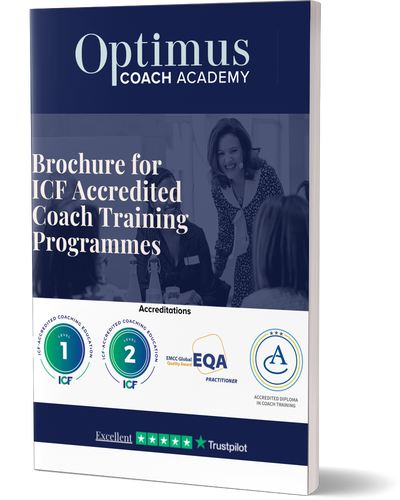
Download Our Diplomas Brochure Today
-
Whats it like?
You'll learn more about the curriculum, structure and how we deliver the program so you can be confident it works for you.
-
How we're different
You'll learn how we integrate our trademarked SELFLESS model and holistic coaching framework into our training to support you to become a confident and competent coach.
-
Who we are
You'll hear from our recent students, more about our team and hear from our Founder, Ruth Kudzi so that you can get a good idea of who we are and what we stand for.
Enrolment Dates
The next start date for the Associate Coach Diploma is week commencing 21st September 2026, completing w/c 25th January 2027.
You can choose either Monday 6pm - 10pm, or Tuesday 10-1pm
Times are UK
No Sessions in w/c:
26th October
21st, 28th December
4th Jabuary
Our group sizes are deliberately small for each cohort to maintain a good trainer / student ratio and so once available spaces are filled, availability moves to the next in take. If you want to discuss any questions you can book a call or email hello@optimuscoachacademy.com
After September the next start date for the Associate Coach Diploma is w/c 16th November 2026 starting week commencing 1st February 2027.
You can choose either Monday 6-9pm or Tuesday 10am - 1pm
Our group sizes are deliberately small for each cohort to maintain a good trainer / student ratio and so once available spaces are filled, availability moves to the next in take.
To enrol for this diploma or discuss your options book a call or email at hello@optimuscoachacademy.com
Course Fees
With our flexible payment options
Pay in full at £5950 + VAT or 12 x £525 + VAT this is £7140 inc. VAT or 12 x £630 inc. VAT
Outside the UK? Please email hello@optimuscoachacademy.com to sign up
Got Any Questions?
Book A Call With A Member of Our Team
Frequently Asked Questions
Are there any recommended training programs for ACC level coach certification?
To obtain an Associate Certified Coach (ACC) credential from the International Coach Federation (ICF)—the leading global organization for coaching standards—you need to complete at least 60 hours of coach-specific education ).
The most seamless pathway to the ACC is enrolling in an ICF Level 1 Accredited Program , which automatically packages the required 60+ training hours, mentor coaching, and the performance evaluation required for your credential. When choosing, prioritize programs that offer live, interactive training rather than fully self-paced, as this is crucial for developing skills and meeting ICF accreditation standards. Ensure the program includes at least 10 hours of mentor coaching and a Performance Evaluation.
What are the main differences between ACC, PCC, and MCC coaching levels?
ACC (Associate Certified Coach)
ACC is the first credential level and is designed for newer coaches. At this stage, coaches demonstrate they can apply the ICF core competencies, build coaching relationships, and conduct effective coaching conversations. It signals that a coach has formal training and supervised development, but is still building experience.
PCC (Professional Certified Coach)
PCC is often considered the benchmark credential for full-time professional coaches. Coaches at this level have significantly more client experience and are expected to facilitate deeper awareness, behavioral change, and accountability. Many organizations looking to hire external coaches specifically request PCC-level credentials.
-
You’ll get 112 hours of in-depth teaching over 7 or 8 months – alongside extensive practical experience, with a Coaching Buddy and pro-bono coaching opportunities – so you have ALL the knowledge, skills and confidence you need, to coach to a professional level
-
You’ll be trained in a diverse range of evidence-based approaches which have strong roots in Psychology & Neuroscience - with varied schools of thought, so you can develop your own unique approach and coaching style
-
You’ll receive 10 hours of mentoring with ICF qualified coaches - this includes 5 hours of group and 5 1:1 sessions to further your personal development as a coach and reflect on your progress
-
You’ll become part of an amazing network of like-minded coaches - including an active, private Facebook community, where you can ask questions and get non-judgmental support for your coaching and your business
-
You’ll have SO much support to start and build your coaching business and get clients - as well as access to a comprehensive online business program, to help you build a thriving practice
What our graduates say about our courses:

"Doing the Optimus Coach Academy diploma has been such a game-changer for me. I now feel armed with a great range of tools to support any individual. The mix of practical learning, live practice, and support from mentors and peers made the whole experience both challenging and inspiring. I've come away with real confidence in myself as a coach."
"From start to finish, the Optimus experience was amazing. The care and attention for our learning journey from the staff was always present. The course material is great and I always felt supported. Thank you so much. "

New To Coaching? Listen to recent graduates who were in your position and hear their experiences first hand
" There is a huge amount of support from the teachers on the course and really great support in the sessions... And then you've got this bespoke service from your mentor where you can really get into some detail on your own journey in coaching. And then the unexpected big element for me is about finding this community of peers who are going through the same journey with different approaches, a real diversity of professions and expertise and ages and so on" Tess Nixon Speller - Coach & Fundraising Consultant
"It’s opened my eyes actually to all different types of coaching and that was part of the reason why I chose to go on the Optimus course. When you do it in a corporate environment, typically, you come across Grow and some of the other more basic, more transactional type models, whereas having the opportunity to learn about things like positive psychology and neuroscience and transactional analysis and how that all links into how you can approach stuff as a coach has made a huge difference." Chris Roberts - Leadership and Team Coach
What our graduates say about our courses:

"What a journey! From play-acting our way through the models when we first met, to deep, authentic coaching conversations, it's been an absolute pleasure to learn with Optimus. The trainers made each session engaging, and we've made some lifelong friendships along the way. Would highly recommend!"
"This course has changed my life! Nothing about me is the same as when I started. I've left the corporate world behind and I'm now starting out as a coach and consultant. I notice how I can engage differently in situations and use my positive curiosity for better outcomes. If anyone is thinking about signing up, don't hesitate for a minute. You will have no regrets!"

Got Any Questions?
Book A Call With A Member of Our Team
Course Fees
With our flexible payment options
Pay in full at £5950 + VAT or 12 x £525 + VAT this is £7140 inc. VAT or 12 x £630 inc. VAT
Outside the UK? Please email hello@optimuscoachacademy.com to sign up
More About Our Diploma
Small cohort groups (maximum 14) so you can build strong relationships and get the personal support you need – while also being part of our bigger network of incredible students and alumni coaches, from a diverse range of backgrounds
Get a wealth of support to start and grow your own coaching business, with in-depth mentoring and courses – so you can build your practice while you develop your skills as an excellent coach
Our highly experienced tutors and trainers are all ICF qualified, from a wide range of backgrounds and with diverse industry knowledge, to support you every step of the way. Our founder Ruth Kudzi, MCC delivers around 50% of the training on the diploma.
You’ll study a wide range of evidence-based coaching approaches including Neuroscience, Positive psychology, Somatic coaching and Coaching for Emotions linked into our holistic coaching framework. We teach you how to be a coach, how to inform your practice and then frameworks, tools and approaches you can use.
As well as the chance to coach and be coached in most sessions (with feedback), you’ll also be matched with a coaching peer to further develop your skills. And you can build your coaching hours with opportunities for pro bono coaching, if you want to work with third sector and charitable organisations (or if you want to get more coaching hours under your belt and feel totally confident, before you take the leap into your own business!). We can always support you with coaching hours.
The course is accredited by the ICF, EMCC and AC.
For you to become accredited : with the EMCC this can happen directly after completion. You will be accredited at the Practitioner or Senior Practitioner level depending on your experience.
For the ICF when you have 100 coaching hours you can apply for ACC in total you will have to sit an online multiple choice test (we support you to prepare for this). When you complete 500 hours in total you apply for PCC as above.
For the AC we support you with the process.
All of the accreditation bodies charge a fee for accreditation : remember you don't need to do any additional training as all is covered in the course up to the PCC level for the ICF.
New To Coaching? Listen to recent graduates who were in your position and hear their experiences first hand
"The reason I chose Optimus was really because it is very practical. You get a lot of experience on the course, as opposed to some other courses. which are very much more theoretical and I didn't feel would give me a lot of experience, especially as I was a new coach and I really wanted to immerse myself in the whole experience" Chloe Hilliard
" I wanted to understand coaching and different aspects of coaching beyond what I was organically doing.... So before, I would coach intuitively with the tools that I had at that time. The fact that my tool box has been increased with all of these really powerful modules means I am coaching even better. Lex Showunmi
Existing Coach ? Discover the impact the training has had on other full time coaches and how it has benefitted them.
" I previously trained as a professional coach ten years ago under my NLP Practitioner and then when I was looking to sort of grow out beyond and develop myself into my own business, as opposed to just working for other people, I wanted to make sure that I had the right qualifications to stand out. I started following Ruth, seeing more and more about Optimus and wanting to get certified as ICF accredited. " Michelle Parsons - Performance Coach
The one thing that I can say that Optimus has done extremely well, and there are many, but the one that comes to mind is the mentoring piece that is provided... We have an intimate one on one time with a mentor to sort of go through different and allows us to ask questions and to really be coached by somebody else through the whole process. And then we had the group mentoring which was also a nice little added feature." Darren Micallef - Leadership Coach
Got Any Questions?
Book A Call With One of Our Team
Download Our Diplomas Brochure Today
For further information on our Diplomas and accredited training programmes